How to break a belief that is holding you back
The ABC Technique
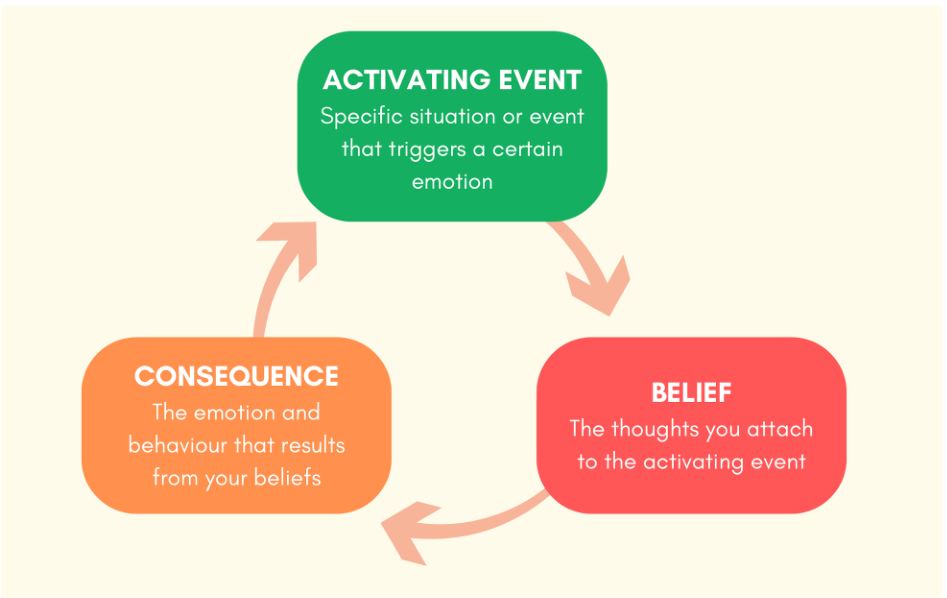
What it is
A simple way to pull apart a thought that is holding you back, so you can see whether it is actually true. Three letters, in order.
How it works
A is the activating event. The situation that set it off. A meeting where you needed to speak. A manager asking for your view. Just what happened, with no interpretation added.
B is the belief. The thought you attached to that event. This is the part that feels like a fact but is not. Something like if I say what I think, people will find me pushy.
C is the consequence. What the belief caused. The nerves, the silence, the decision to say nothing. People usually blame the event for this, but the belief in the middle is what actually decided it.
Then comes the part that changes things. Take the belief and ask four questions.
Is this based on facts or assumptions? Have there been times it was proven wrong? What would a friend or mentor say about it? What is the worst that happens if it is false?
Then write a replacement that is balanced and true. Not a slogan, something you would actually believe.
Examples
The belief. If I express my opinion, people will think I am being pushy.
The reframe. Sharing my thoughts adds to the conversation, and people value my input.
A second one. I am not knowledgeable enough to comment becomes I know this part well, and asking about the rest is how I learn.
5 Tips for challenging a belief
- Write it down word for wordUse the exact words in your head, not a tidy version. A belief is easier to argue with once it is a sentence on a page.
- Separate the event from the thoughtThe meeting happened. What you thought about it is separate. Most of the weight is in the thought, not the event.
- Ask if it is fact or assumptionFacts have evidence. Assumptions have a feeling and a story. Most limiting beliefs turn out to be the second one.
- Look for times it was not trueFind one occasion where you spoke up and it went fine. One exception is enough to stop it being a rule.
- Write the replacement down tooDo not stop at proving the old thought wrong. Write the new one out and use it next time, or the old one just comes back.
Check yourself
3 questions to answer
You have to speak in a meeting, and you think everyone will find you pushy. Which part of ABC is that thought?
The event is the meeting itself. Just what happened, with nothing added to it.
The consequence is what the thought caused, like the nerves or staying quiet.
It is one of the three. Every thought in that moment sits somewhere in ABC.
The meeting is the event. The thought you attach to it is the belief. What you then do, like staying quiet, is the consequence.
Which question actually tests a belief?
That keeps you inside the feeling instead of checking whether it is true.
That attacks you rather than the thought, and leaves the belief untouched.
Common does not mean true. Plenty of people believe things that are wrong.
A belief only loosens when you look for evidence. The other questions keep you inside the feeling instead of examining it.
You believe people will think you are pushy if you speak up. Which of these is a reframe?
That is obeying the belief, not testing it.
That agrees with the belief and spreads it to everybody else.
The apology shows the belief is still running underneath.
A reframe is balanced and true, not just positive. It replaces the belief rather than working around it.
0 of 3 answered
Reflection
The belief in your way
- What thought stops you speaking up? Write it word for word.
Testing it
- Test that thought with one of the four questions. What did you find?
Your commitment
- What is your new thought and when will you use it?
Your answers save on this device, so you can come back to them and nobody else can read them. If you use Speak your answer, your browser sends the recording to its own speech service to turn it into words. Type your answer instead if you would rather nothing left the device.
Finish this topic
Two things to complete before your next session.
- Get all 3 questions in Check yourself right Not yet
- Answer all 3 reflection questions Not yet
Relevant topics
Once the belief is dealt with, this is how you say the thing.
LeadershipCourage Is Moving AnywayThe same idea applied to action rather than thought.
What to do when someone disagrees with what you said.
Coming soon